
When I got invited to Malta for a Military Heritage press trip, I really had no idea what to expect. Malta was never on my travel radar, and ‘military’ is not quite the reason I tend to choose travel destinations. My choice of travel destinations are greatly influenced by a country’s culture, gastronomic offerings, scenic trails and overall safety for women travelers. Little did I know this historically packed itinerary would encapsulate all this, and more!

Flight to Malta
Emirates has daily flights from Dubai to Malta, departure time 7:55am from Terminal 3. It is an 8 hour flight, including a one-hour stopover at Larnaca (Cyprus).
Special thanks to our hosts
We were a group of nine journalists from across the world. This itinerary was created to specifically highlight the Military Heritage of Malta by the Malta Tourism board @visitmalta Special thanks to our host Mr. Donavan who went out of his way to ensure the safety and comfort of each guest, and coordinating each of our set activities.
We had a local celebrity as our tour guide for our four-day historically-packed agenda. It is rare to come across individuals as passionate about their heritage as Mr. Vincent Zammit. The author of 8 books, all related to Maltese history, has a boisterously pleasing voice and affable personality that defy his 70 years. Mr. Zammit’s enthusiasm for Malta and European history is absolutely contagious and we were repeatedly stopped by his fans and students everywhere we went!

Where we stayed
Our home for the week was in a 400 year-old Maltese stone building that has been renovated into a boutique hotel. This is Talbot & Bons, located in the village of Gudja and just 2 minutes away from Malta International Airport. A Bolt taxi ride to Valletta, the capital city costs a decent € 15, and every morning we were treated to a traditional Maltese breakfast spread. My personal favorite was the ‘Maltese Pudding’, a special bread with cocoa and dried fruit. Cherise, our absolutely lovely hostess, told us she buys them every morning from a local delivery truck and she even packed me some to take home! This is true Maltese hospitality.

📍 Malta Military Heritage Trip, Day One
We started our journey with a very scenic climb up a hill in historic Borg in-Nadur. Borg (pronounced ‘Borj’ in Maltese) translates to ‘a heap’, and ‘Nadur’ is ‘high ground’.
7000 years ago, this stony high-ground was occupied by cave dwellers who mysteriously disappeared and were replaced by the Bronze Age people 4000 years later. They created a line of defense, the very first fortification site in Malta to defend against the sea people of the Far East, as well as rival villages.

Mr. Zammit also pointed out the Ghar Dalam cave at Borg in-Nadur where the earliest human remains were found. More interestingly, they have also excavated animal remains there including three types of elephants. This included the European elephants which are now extinct. When the water levels rose, these elephants got stranded in Malta and doe to a lack of food, they shrunk in size. This is how Maltese pygmy elephants came to be!
Our next stop was the Tarxien Temples, dating as far back as 3600 BC making it the oldest freestanding buildings to be listed on the UNESCO heritage list. This site is older than the Pyramids of Egypt and Stonehenge.
The megalithic brilliance of this site whispers stories of a Neolithic period where many interesting artifacts have, and continue to be excavated. The temple features six rooms, and knowing of their exact usage is total guesswork.
Mr. Zammit recounted the story of a Russian lecturer who took special permission to touch the walls, and with her psychic abilities, concluded that the outer rooms were for educational purposes, whereas the inner chambers were for the chosen few.
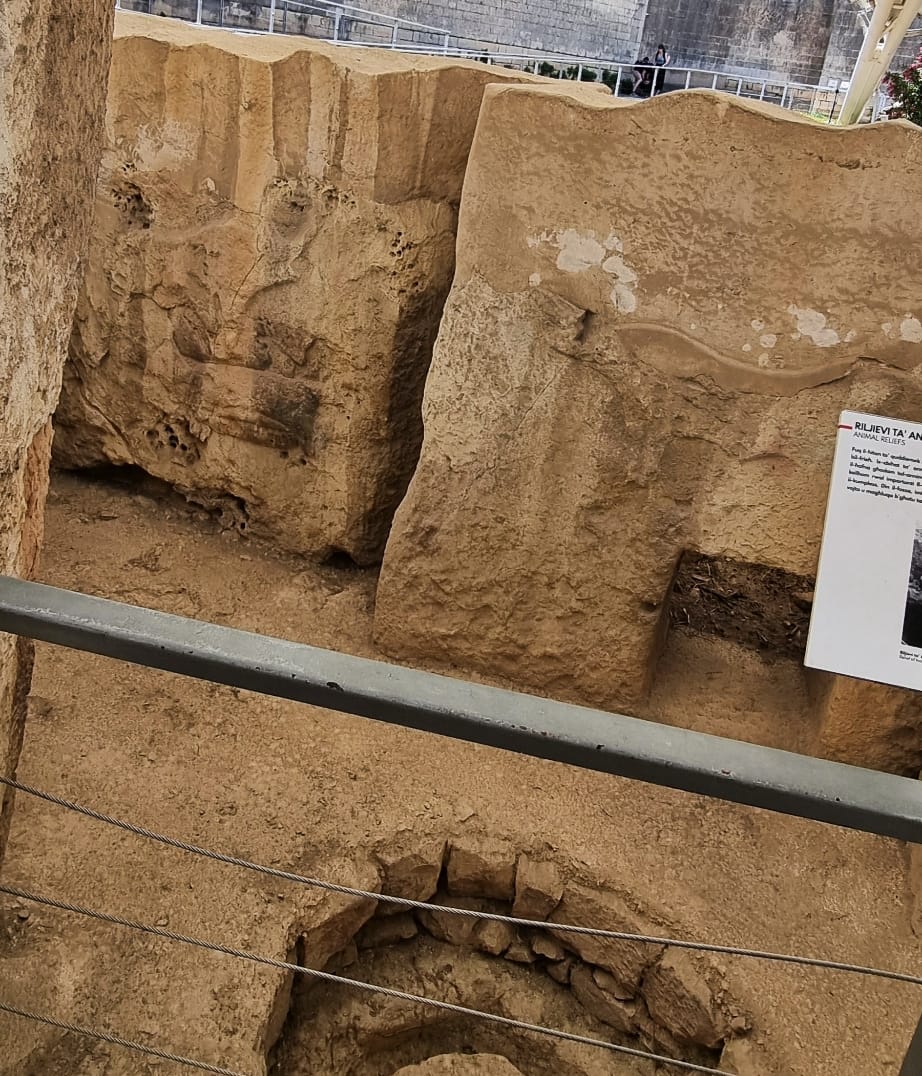
Some of the most noted relics of these temples are cremation sites, the remains of a Roman farmhouse, ancient pottery in the style of the Cyladic civilization, the statue of a human torso with feet referred to as the Tarxien Goddess, and one that really caught my attention… the stone-carved inscription of two bulls and a sow.
The bulls have their horns interlocked, and the sow has thirteen suckling piglets. Many interpretations have been shared on this finding, all in agreement that it stands for fertility. The ancient people knew the importance of animal husbandry, of farming and having good food for fertility.
What is more interesting is Mr. Zammit’s theory that the sow has exactly 13 piglets, denoting the yearly menstrual cycle of a healthy, fertile woman. The ancients knew of the sun and stars, and had their own means of tracking time and fertility cycles. The importance given to fertility is also a sign that ancient civilization must have been a matriarchal society.
From there we headed on to the Roman walls of Città Melite in Rabat, and descended into Saint Paul’s underground refuge; St. Paul’s Grotto, believed to be the apostle’s hiding place after his shipwreck on the island in 60 AD, a hidden sanctuary that would shape Malta’s Christian identity forever.
A breezy walk across public gardens brought us to the gates of the city of Mdina (‘The Silent City’), a fortified city dating back to 700 BC, that was also the former capital of Malta.
Fun fact: quite a few notable scenes from The Game of Thrones was shot right here in Mdina!
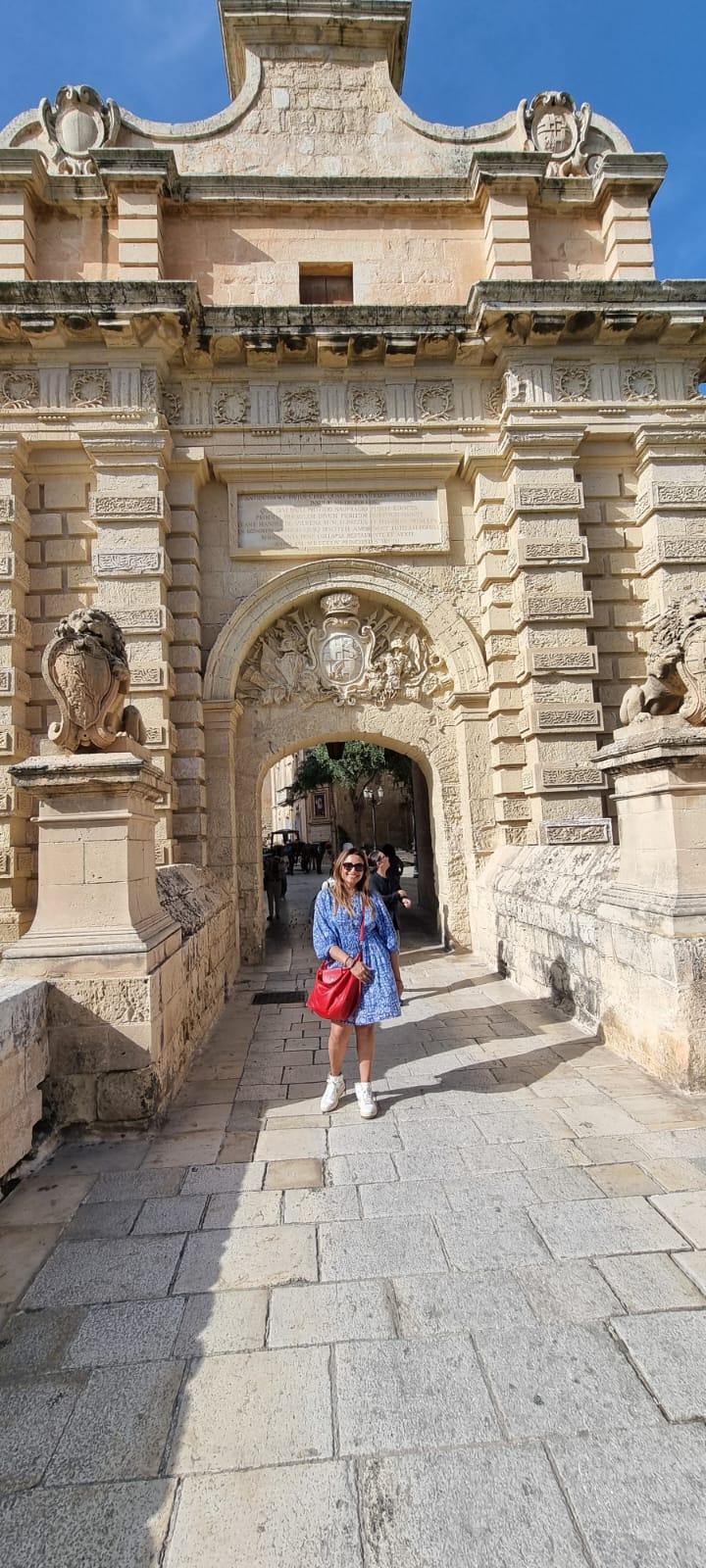
Stepping into Mdina is like walking straight into a whispered legend. The moment you pass through the stone gate, the noise of the modern world fades replaced by the soft echo of footsteps on limestone, horse-driven carriages and the hush of a city that has watched centuries pass from behind high, golden walls. They call it the Silent City, but the silence here speaks volumes. It speaks of Phoenicians, Romans, Arabs, and Knights, all of whom left their mark in the twisting alleyways, sunlit courtyards, and baroque balconies draped in shadow and bougainvillea. Mdina feels lived-in, yet untouched. A honey-toned dream where every corner begs for a photo, and every door seems to guard a secret.
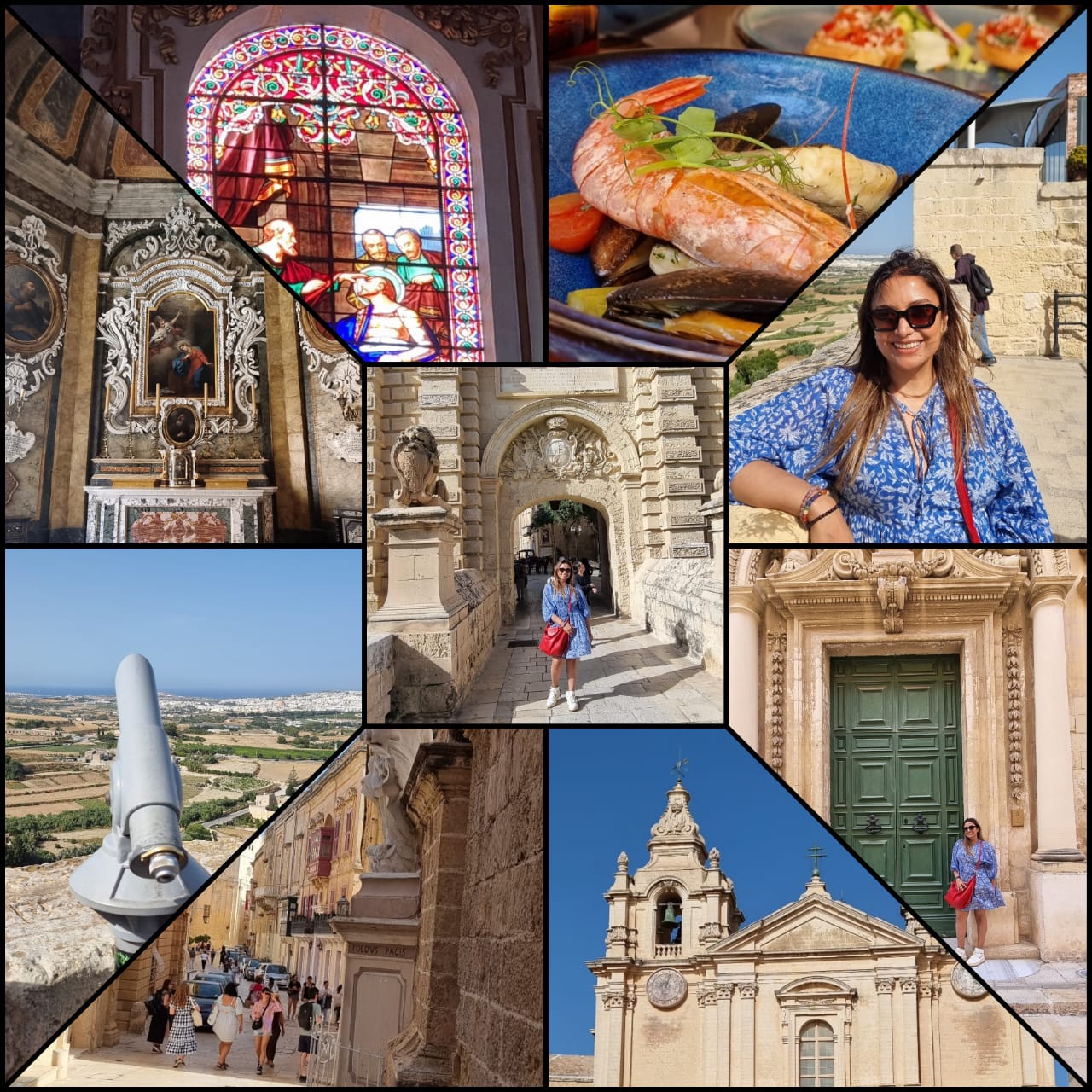
The Cathedral of St. Paul in Mdina is a striking Baroque masterpiece built on the site where, according to legend, the apostle Paul met the Roman governor after his shipwreck. Reconstructed in 1693 after an earthquake, the cathedral features a grand façade of warm limestone, twin bell towers, and a beautifully painted dome. Inside, intricate marble tombstones line the floor, while richly frescoed ceilings and gilded detailing reflect the grandeur of Malta’s Catholic heritage. The cathedral’s art and architecture tell stories of faith, resilience, and nobility, making it absolutely fitting for the spiritual heart of the Silent City.

Next was a breezy walk up to the fortifications of Mdina. These stone walls have protected Malta for over 3,000 years. Originally built by the Phoenicians and later reinforced by the Romans, Arabs, and Knights of St. John, these massive walls encircle the Silent City like a timeless guardian. With panoramic views stretching across the island, the fort served as a strategic stronghold and refuge during invasions. Today, it is flocked with tourists from around the world, taking in breathtaking views of the Maltese landscape.
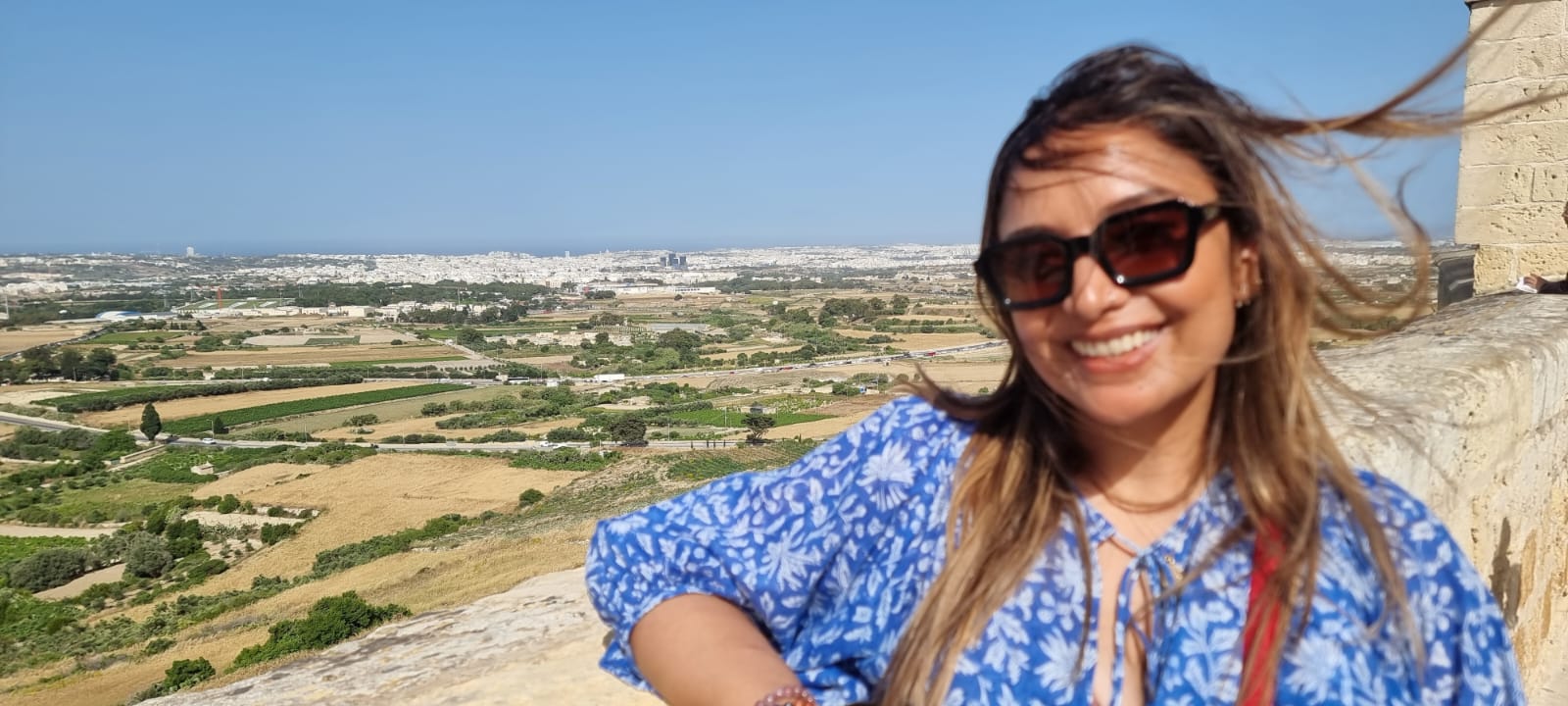
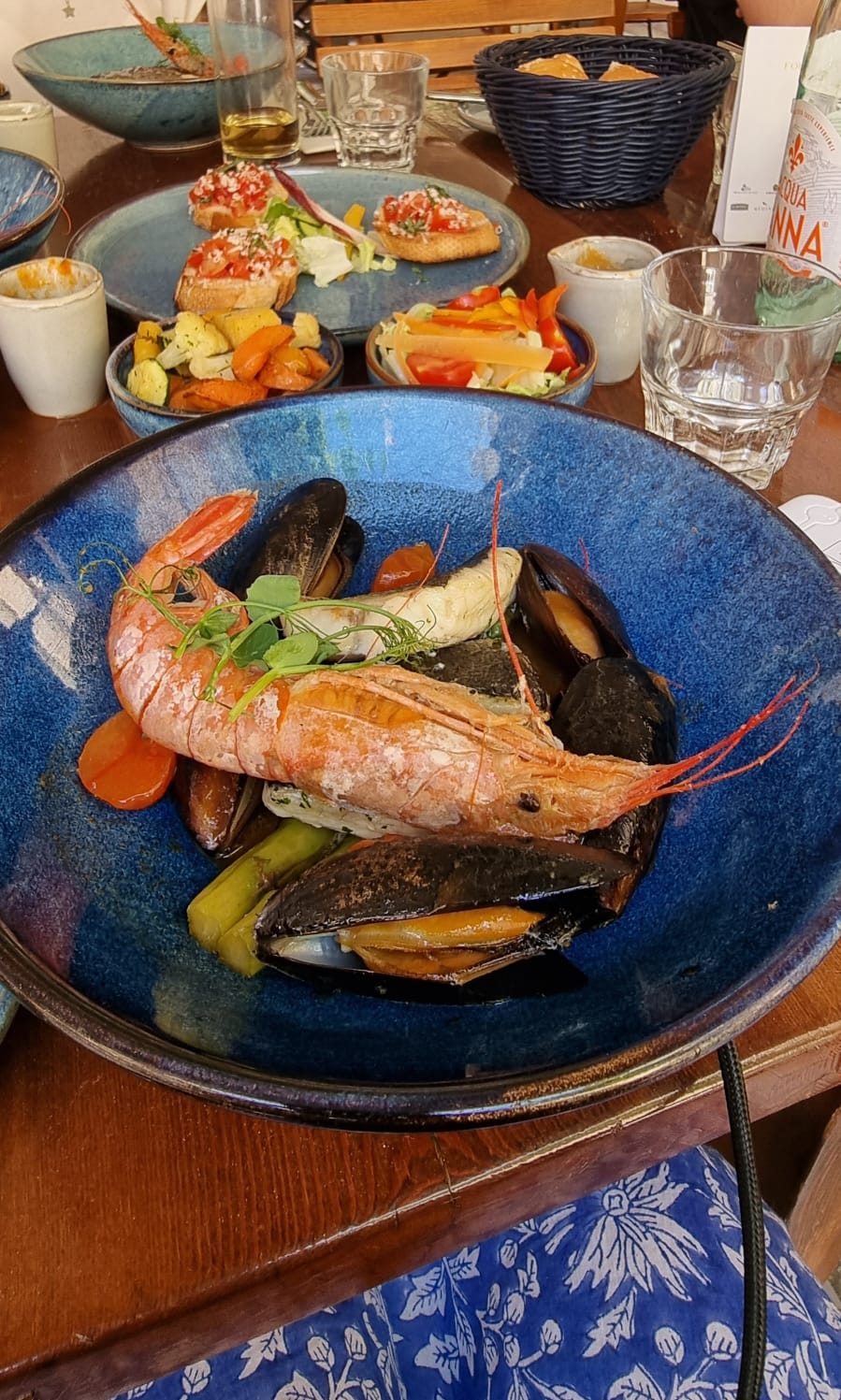
That afternoon, we lunched at Trattoria AD 1530, the perfect spot for alfresco dining at Mdina with stunning views of the Vilhena Palace and the magnificent 17th Century Palazzo of The Xara Palace Boutique Hotel right across. This what I had for lunch:
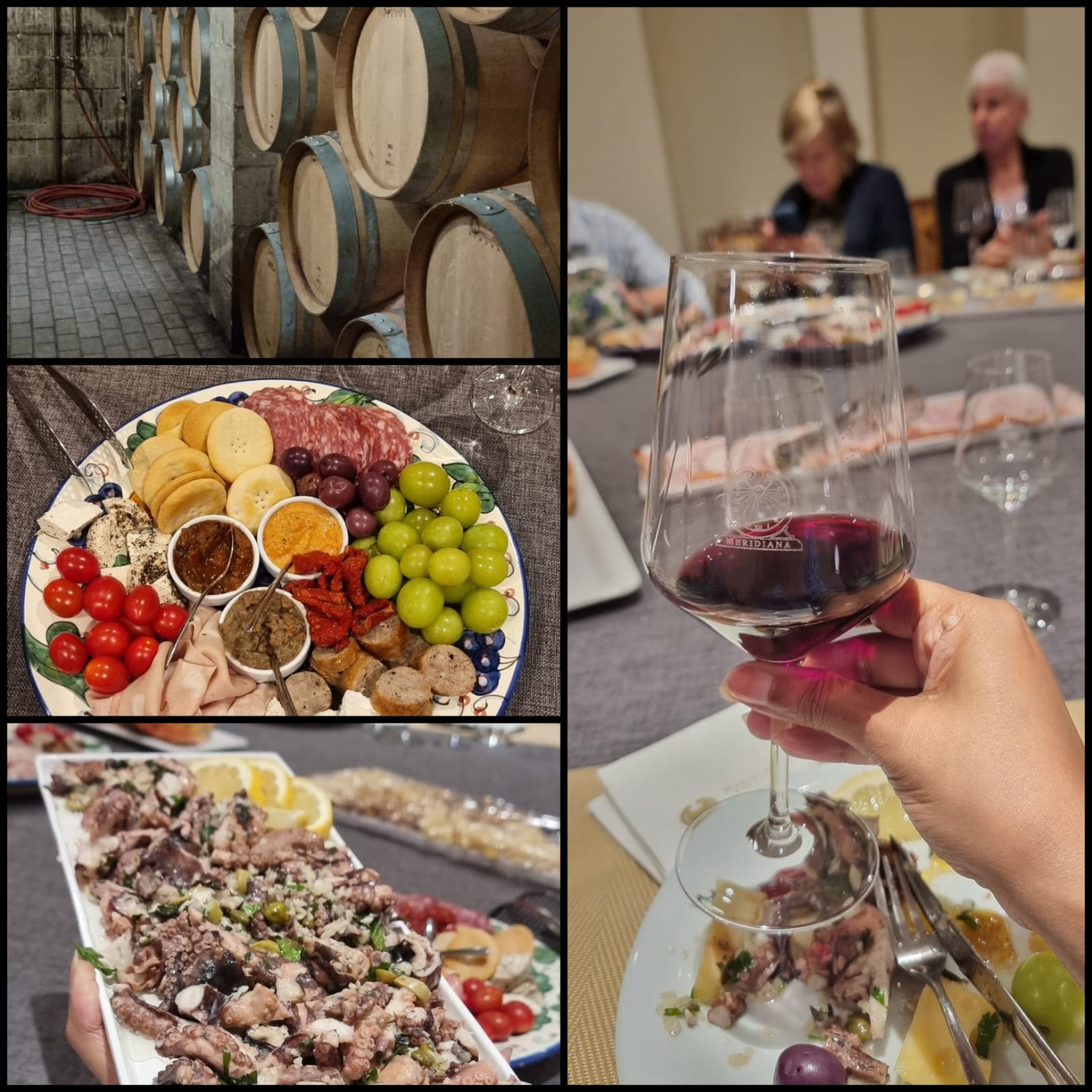
We ended the evening at one of Malta’s finest vineyards, the Meridiana Wine Estate where we got a crash-course on Maltese wine followed by a wine tasting session. The Isis chardonnay was one of the clear winners across our table, and was frequently reordered throughout the rest of our time in Malta.
📍 Malta Military Heritage Trip, Day Two
Malta is comprised of a number of villages, each with its deep-rooted sense of identity, churches and festivals. We drove past Zeitun, one of Malta’s oldest villages who’s name translates to olives, and drove uphill to the Tas-Silg Archeological Complex, overlooking the scenic Marsaxlokk Bay. This archeological site is still under excavation, and features the ruins of an ancient Roman temple believed to have been built for sailors to pay tribute to the gods for safe journeys across the temperamental Mediterranean seas.
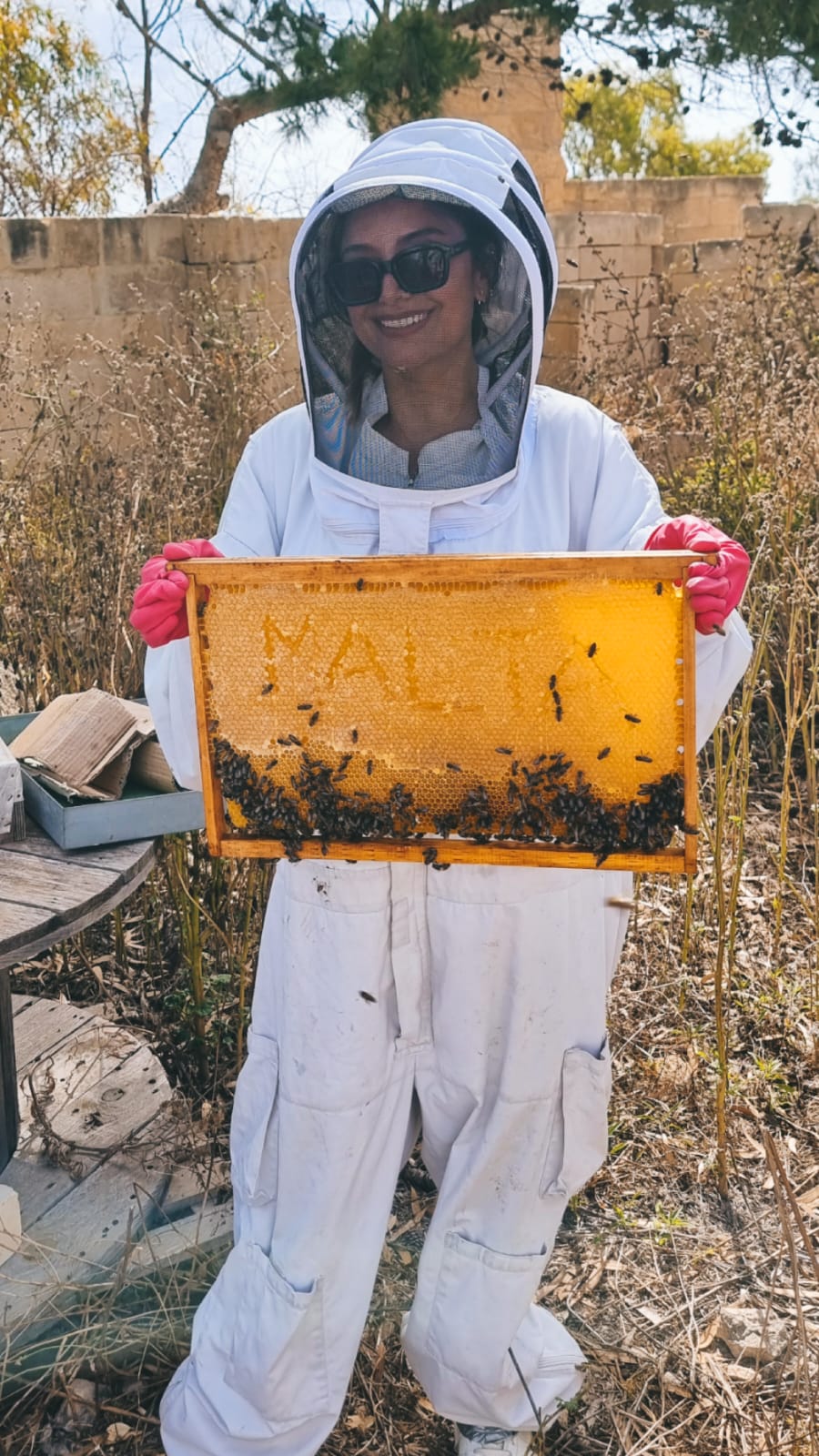
It was the perfect backdrop for having a firsthand experience at honey harvesting! Honey was a prized possession since Roman times, and the country of Malta derives its name from the word ‘honey’. Click here for more details on our honey-sweet experience!
We spent the rest of the afternoon in Birgu, also referred to as Citta Vittoriosa (the Victorious City), a fortified city famed for being the first home of the Knights of the Order of St John, who settled on the island in 1530.
We did the Hospitallers Walking Tour which included a visit to the Church of St. Lawrence. At its very entrance is a life-sized statue of Saint Rocco, the patron protector of plagues. Interestingly, this ornate statue was taken out on religious parades during the recent times of Covid.

The Saint Lawrence Church also houses the largest painting done by the highly reputed Baroque artist Mattia Preti. This piece is entitled The Martyrdom of Saint Lawrence and was completed in 1689 when Preti was at the ripe old age of 75. Using the chiaroscuro technique of dark and light, the painting depicts saint’s gruesome execution on a gridiron. Measuring about 4 by 5.7 meters, the painting suffered over time but underwent full restoration in 2018. Today, it stands as a powerful tribute to both Saint Lawrence’s sacrifice and Preti’s artistic genius, and remains a central icon of Malta’s sacred and cultural heritage.

Another national treasure of Malta is showcased right next door in the Victoriosa Museum. This is the hat and sword of La Valette, the very ones he used during the Great Siege of 1565. After tasting victory, La Valette offered his hat and sword in pious gratitude to the Virgin of Damascus for divine intervention and protection. Today, these relics serve as a symbol of Malta’s faith and resilience.

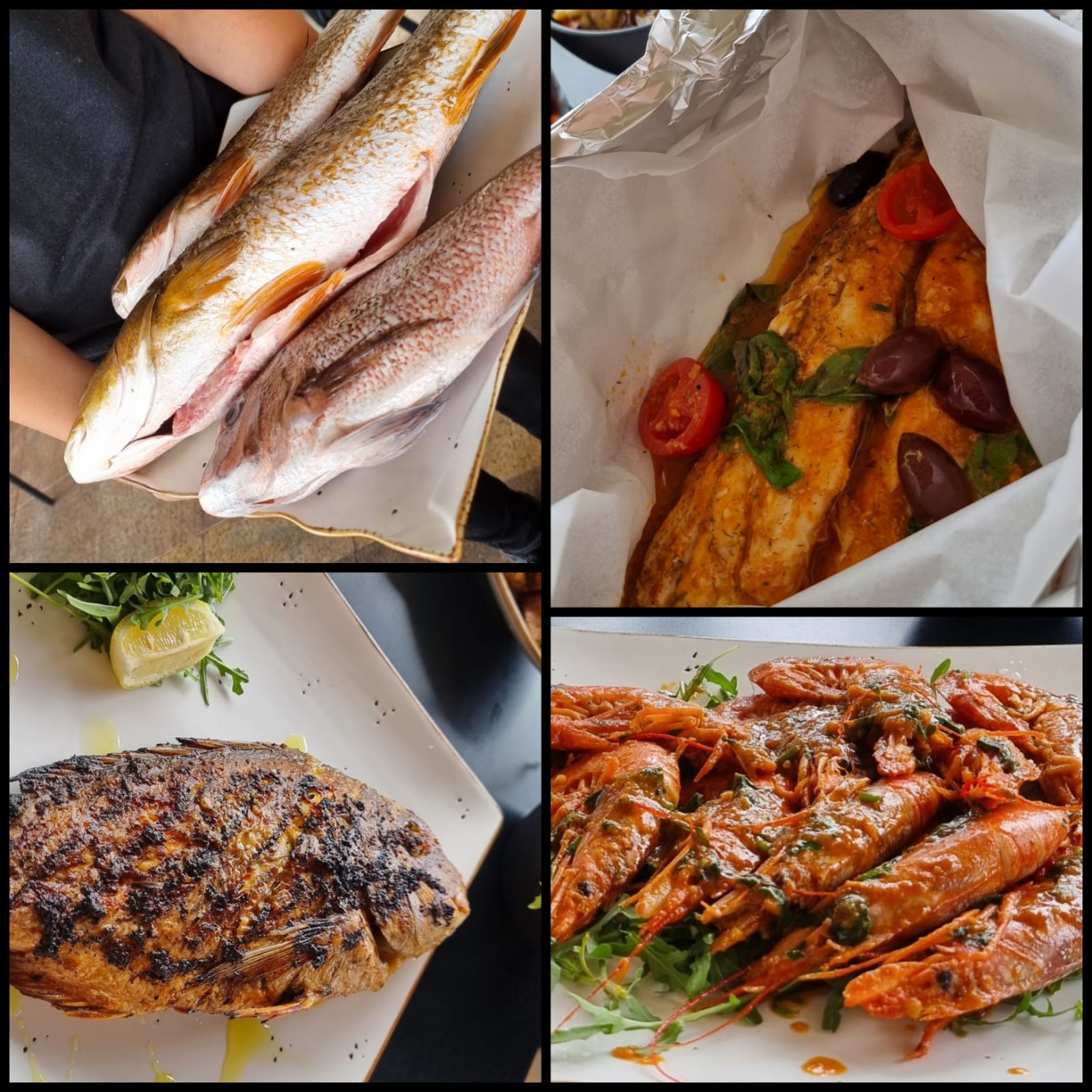
We then proceeded Don Berto for a delicious seafood lunch where we were given the choice of fresh catches of the day that can be prepared in a variety of ways. I went for the Brown Meager, and had it cooked al cartoccio (packed in foil, in a red wine gravy) and it honestly one of the best seafood dishes I’ve had till date!
After such a hearty lunch, a long walk was in order and we headed to Fort Saint Angelo. This bastion, once the headquarters of the Knights of St. John during the Great Siege of 1565, offers sweeping views of the Grand Harbour, the now scenically peaceful waters that once braced for Ottoman invasion. Inside, stone corridors echo with centuries of defiance, from medieval stronghold to British naval base. Fort Saint Angelo was abandoned by the British in 1979, and Heritage Malta has since done a great job at restoring this historical fort.
Fort Saint Angelo also includes a church that was built years later in 1680. It was built with a durable white stone to save cost, instead of the more common Maltese honey-hued variety. Interestingly, a pale pink column stands tall within this church, and its stone dates back to a completely different era. It is believed to have belonged to the Temple of Hercules. I find it so fascinating how different timelines and faiths get amalgamated into historical relics, and this is especially evident in Malta.
That evening, we were given a taste of true Maltese hospitality at the Ta’Xmun Olive Grove experience. This family-run olive grove had a special dinner right under the Maltese night sky and olive trees for us, and our feast included Medieval-style legs of lamb, rabbit game, a local platter of olives and cheese, and a very informative olive oil tasting session. Click here for a detailed blog post on the significance of olive oil in Maltese history.
Interesting fact: did you know a bottle of olive oil only needs to be 25% extra virgin to be classed ‘extra virgin olive oil’?!
📍 Malta Military Heritage Trip, Day Three
Day three was dedicated to the beautiful island of Gozo, but before we got to our ferry, we made a pit stop at Saint Agatha’s Tower (also known as the Red Tower) and Mr. Zammit treated us to stories about The Face of Lascaris. Click here for more.

We were fortunate to have a beautifully breezy, sunny day despite weather forecasts declaring torrential rain. The ferry ride to Gozo across the vibrantly blue waters of the Mediterranean with scenic views of the Maltese coastlines was an absolute treat.
We then explored Cittadella (The Citadel), Gozo’s landmark historical destination, an inhabited fortress city that originates from the Bronze Ages. If you think Malta’s tiny sister island, Gozo, is all sunsets and sea views, you’re not mistaken, but back in July 1551, it witnessed one of the darkest days in history.

The Ottoman Empire, led by Sinan Pasha and the infamous corsair Dragut, launched a brutal attack on Gozo. After a short siege, the island’s main fortress, the Cittadella fell. And in a matter of hours, almost the entire population of around 7,000 were taken into slavery. They were shipped off to North Africa and Constantinople, never to return. The island was left eerily empty.
But among the horror, one story stands out; the story of Bernardo Dupuo, a Gozitan resident of the Cittadella who did the unthinkable. Knowing the horrors of slavery, he opted for death for his family, and murdered his wife and two young daughters himself. His actions go against Christian moral teachings, yet many respect his decision as a tragic act of love and despair. The story still haunts the narrow lanes of his ancient dwellings at Citadella, Gozo.
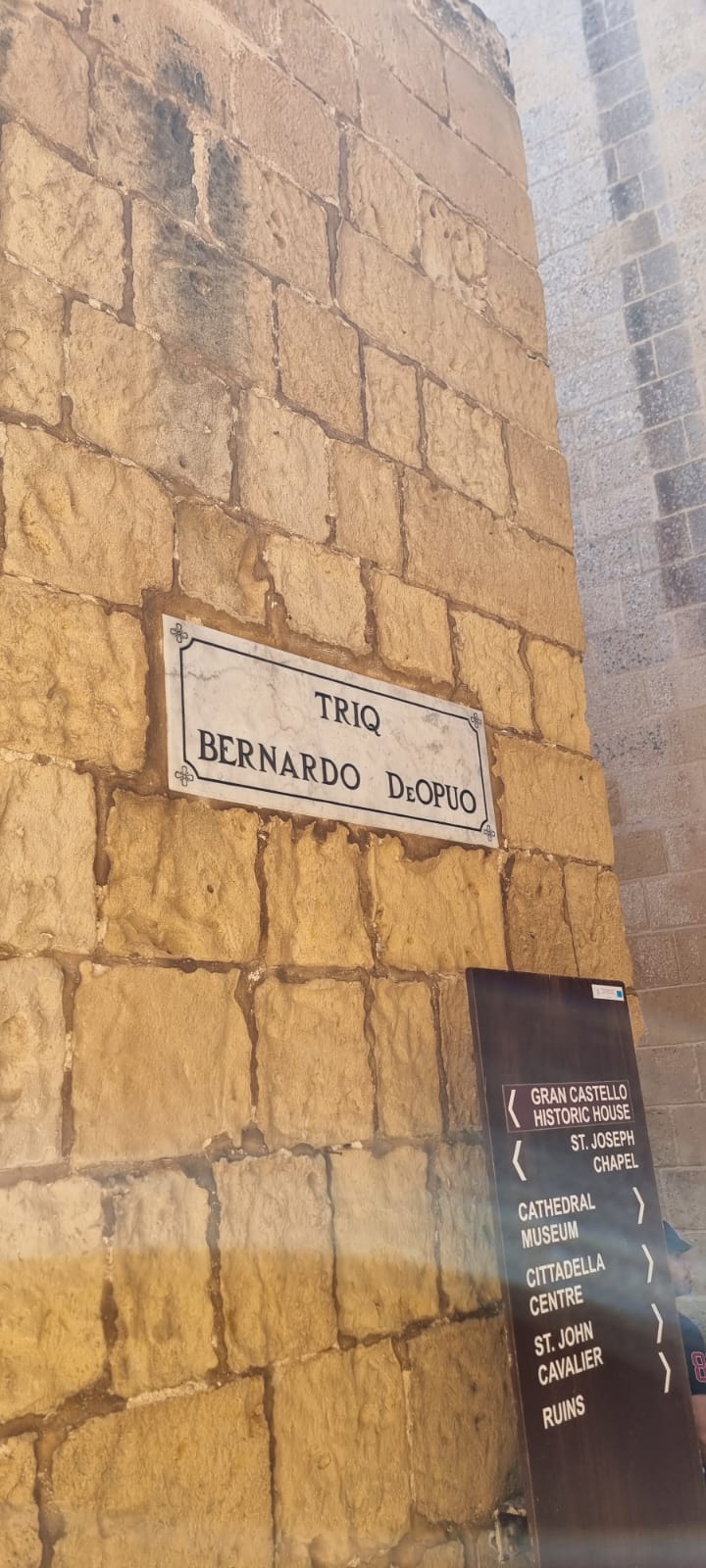
After the attack, Gozo had to rebuild from nothing. New settlers came from Malta and Sicily, and the scars of 1551 reshaped everything from fortifications to faith. Today, Gozo is a peaceful, seaside destination, but beneath the quiet, the ghosts of 1551 still whisper.
On a lighter, tastier note, we ended our daycation on the beautiful island of Gozo at a family-owned seaside restaurant called Il-Kartell where the lovely waitress dished out the catch of the day; freshly grilled tuna steaks caught at sea by her brother.

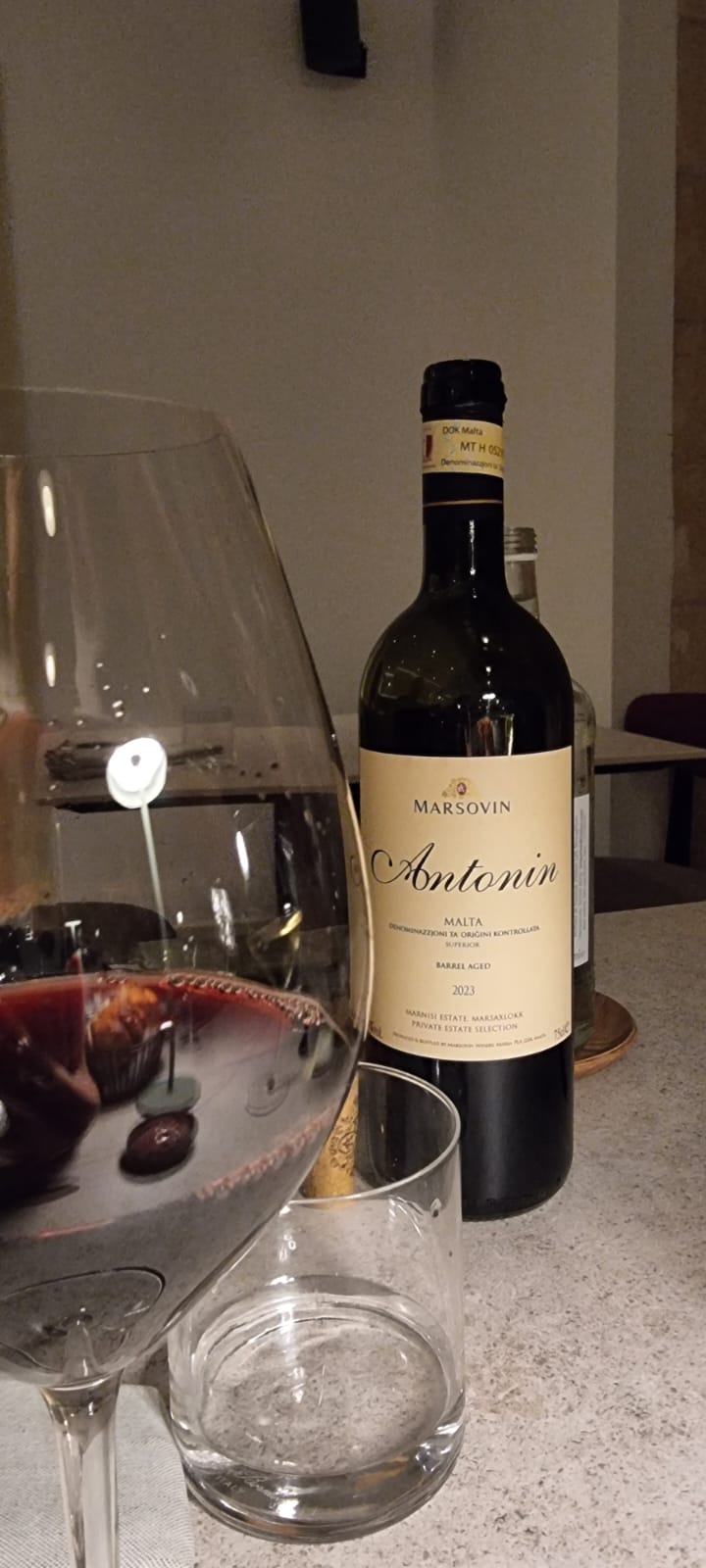
For dinner that night, I caught my first glimpses of the city of Valletta where we indulged in a Michelin-starred restaurant called One80. I went for the ribeye steak, medium-rare paired with an absolutely bold, fruity, dark Maltese red wine called Antonin by the Marsovin vineyards, as recommended by our very tasteful host Mr. Donavan from the Malta Tourism board.

📍 Malta Military Heritage Trip, Day Four
Our last day was spent in Valletta. This fortified city is a beautiful balance of ancient and new. We walked in through the fifth entrance, with the new parliament building, fondly known as the ‘Cheese Grater Building’ on our right, and a medieval-style wealthy English merchant’s dwellings on the right.
Valletta, Malta’s capital, was founded in 1566 by the Order of St. John after their victory in the Great Siege of 1565. Named after Grand Master Jean de Valette, the city was designed as a fortified stronghold and became one of Europe’s first planned cities. Built on a peninsula between two harbors, Valletta blended military engineering with Baroque grandeur. Over the centuries, it has withstood Ottoman attacks, Napoleonic occupation, and WWII bombings — yet remains a cultural and architectural jewel, recognized today as a UNESCO World Heritage Site.
We did a walk through the beautiful Upper Barrakka Gardens, which was a private retreat for Italian Knights of the Order of St. John in the 1660s. Built atop Valletta’s city bastions, the gardens offered sweeping views of the Grand Harbour and the Three Cities below. In the 19th century, the British opened the gardens to the public, adding monuments, archways, and the now-famous Saluting Battery, where ceremonial cannon fire still marks each day at noon.
Just below the gardens lies Fort St. Elmo, one of Malta’s most storied fortresses. Originally constructed by the Knights in 1552, it played a heroic role during the Great Siege of 1565, holding out for weeks against overwhelming Ottoman forces. Though it eventually fell, its resistance gave Valletta time to prepare. The fort was later expanded by the Knights and the British, adapting through various conflicts, including World War II. Today, it houses the National War Museum, offering a powerful journey through Malta’s wartime legacy, from swords to Spitfires.




We did a quick stop at Caffe Cordina for lunch, a popular cafe in Valletta that has been in operation since 1837! Here, we got introduced to Malta’s favorite snack, the Pastizzi. These flaky savory delights traditionally come in two varieties; ricotta or curried peas. I personally loved the ricotta version. And just look at how spectacular my Octopus Salad looked! It came encased in a cheddar basket, absolutely delicious!

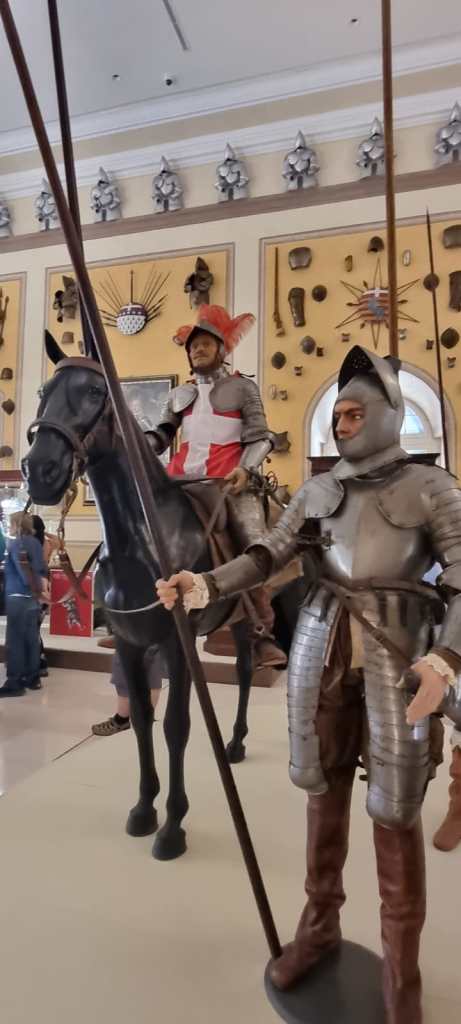
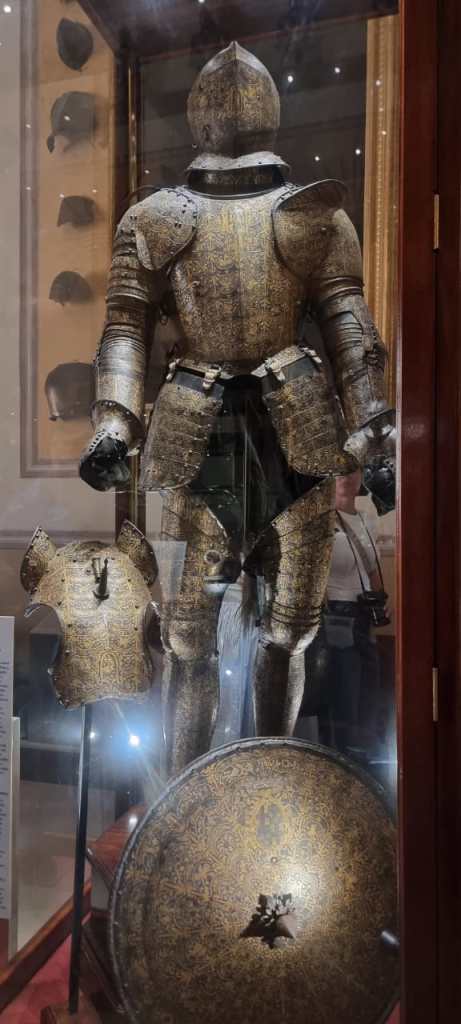
We also toured the Grand Master’s Palace. Built in the late 16th century, was the seat of power for the Knights of St. John and the residence of the Grand Master himself. Designed by architect Girolamo Cassar, the palace reflects the Order’s wealth and authority during Malta’s golden age. Over the centuries, it served as the administrative center under the Knights, later becoming the Governor’s Palace during British rule. Today, it houses the Office of the President of Malta and a museum, including the impressive State Rooms and the Palace Armory, which holds one of Europe’s finest collections of 16th–18th century arms and armor.
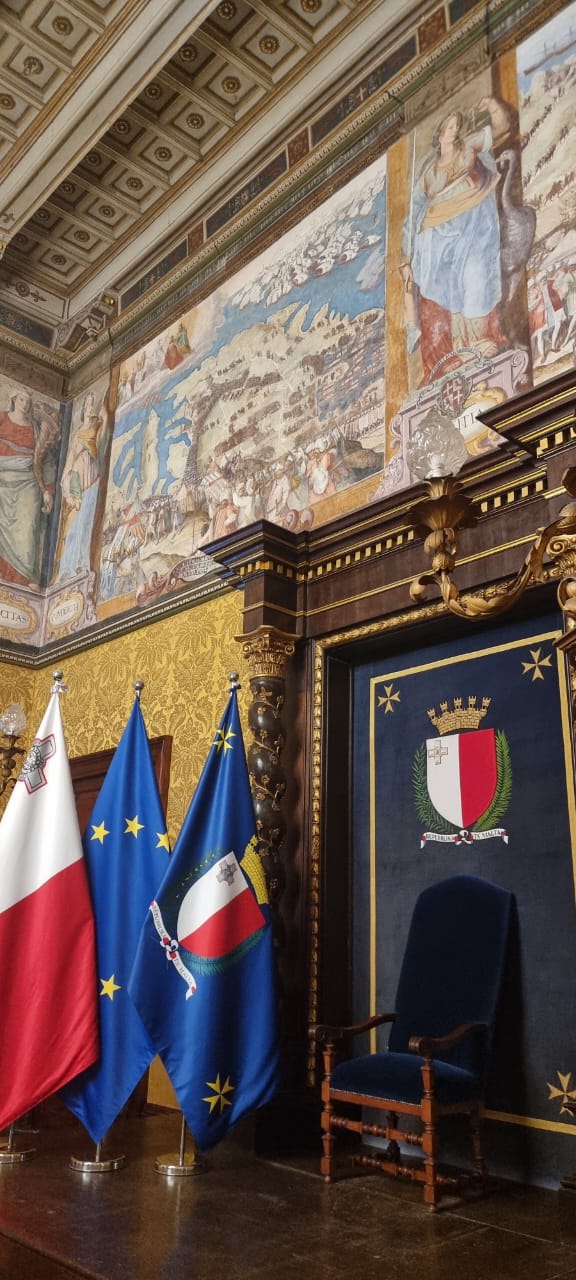
But the most memorable part of my day in Valletta was in the Saint John’s Co-Cathedral. Deceptively plain on the outside, this church houses one of Europe’s most ornate Baroque interiors featuring cathedrals dedicated to different languages, the tombstones of nearly 400 knights and the hauntingly macabre painting of the ‘Beheading of Saint John‘ by Caravaggio. Click here for more details.
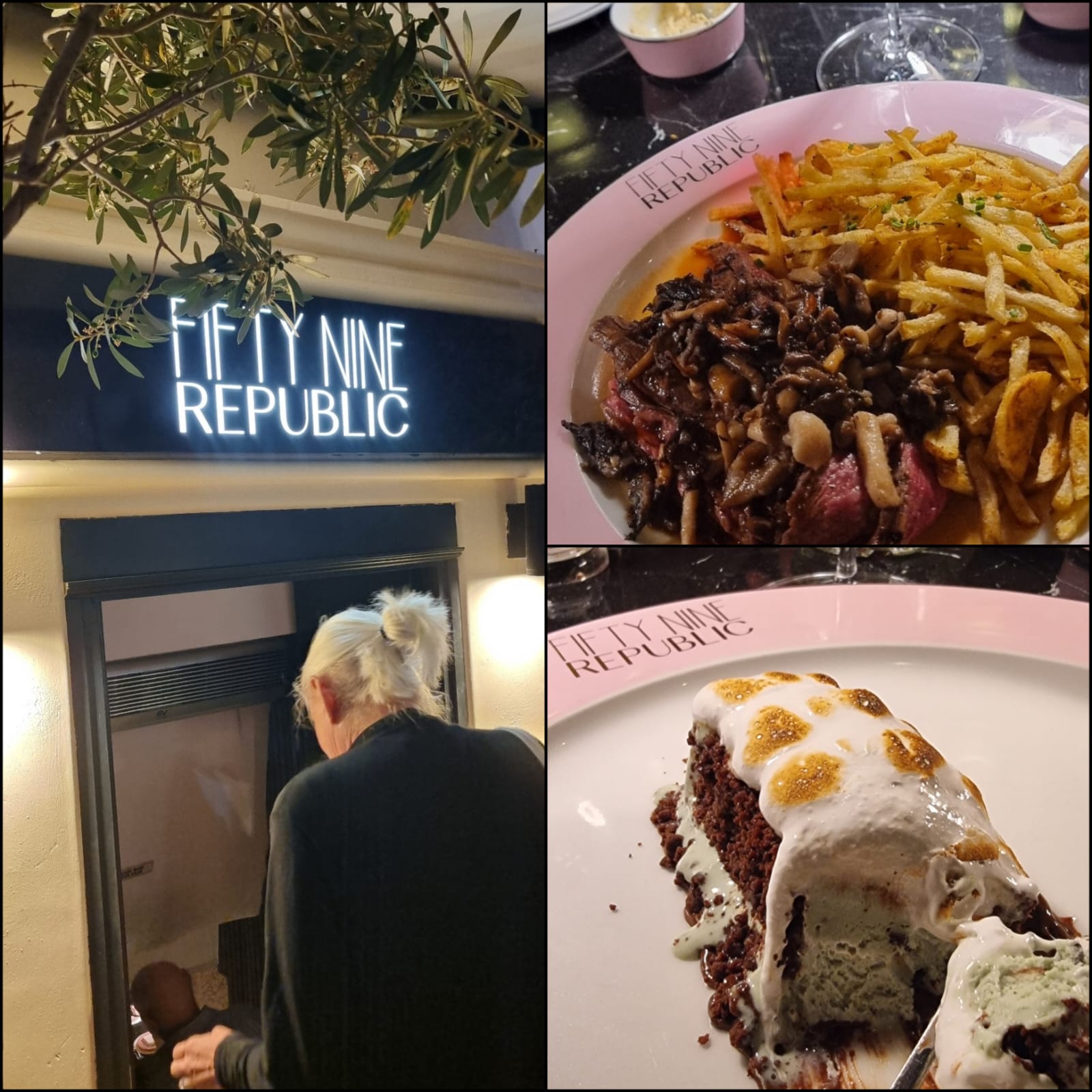
We ended our tour of Malta with yet another impeccably delicious dinner at an award-wining restaurant called Fifty Nine Republic. The Beef Wellington was highly recommended, but as it contains pork, I went for the Wagyu with fries, and ended with the most decadent After 8 Baked Alaska dessert. Sweet endings to one of the best tours I’ve been on yet!
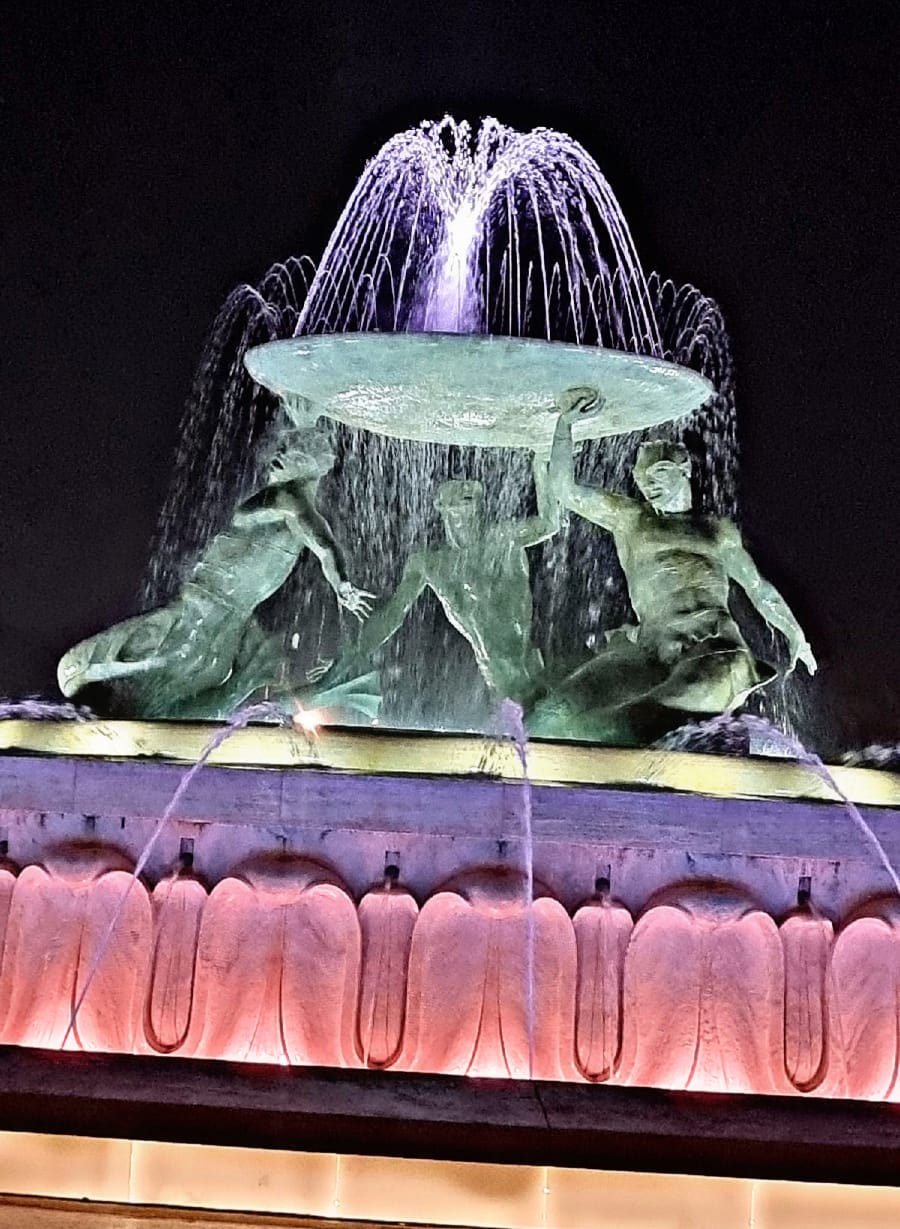
We walked past the Triton Fountain on our way out of Valletta; it looks all the more striking by night! Completed in 1959, this beautiful fountain symbolizes Malta’s link to the sea and classical mythology. Featuring three bronze Tritons holding a basin, it stands near the city gate, welcoming visitors to the capital. Recently restored, it blends modernist design with cultural pride, serving as a national and civic landmark.
Thank-you Malta!
In summary, my trip to Malta was nothing short of extraordinary. Despite being one of the world’s smallest nations, this sun-drenched archipelago is a historian’s dream, a living museum with monuments dating back to 3600 BC, even older than the Egyptian pyramids. Every alleyway whispers a tale, every stone holds a secret, and every vista begs to be photographed. What truly sets Malta apart is its people; warm, welcoming, and deeply proud of their heritage. As a foodie, I was pleasantly surprised by the richness of Maltese honey, olive oil, and wines, all bearing the mark of ancient Roman influence. It’s said the Romans never truly left, their legacy lingers in the flavors, the folklore, and the very soul of the Mediterranean. Even after a meticulously curated 4-day Military Heritage Tour, I left with a sense that Malta has more stories to tell, and I hope to be back to listen, taste, and wander once more through this enduring “Jewel of the Mediterranean.”

 The Tezzy Files