
London is a city of layers. Peel one back and you will find another story beneath it, older, grittier, richer in texture. Some of those stories live far away from postcard landmarks and tourist itineraries. One such place is Brick Lane and tucked within it, Bangla Town.

Brick Lane has long been a landing point for migrants. Over centuries, it has welcomed waves of Huguenots, Irish and Jewish communities, and later South Asian migrants, particularly from Bangladesh. Each group left its imprint in the architecture, the food, and the languages spoken on the street. What exists today is an amalgamation of cultures, histories, and survival stories, not curated for visitors but lived in daily.
Bangla Town, as it is often called, is the heart of London’s Bangladeshi community. It is residential, raw, and unapologetically local, very different from the polished London most tourists experience. And that is exactly how I found myself there.
I was in London with my best friend Sabrina, my Bangla soul sister, who flew all the way from Washington DC just to be with me during this trip. We were indulging in all things Western, European cafés, classic London fare, and endless plates that looked great on Instagram. But as it always happens with Desi roots, no matter how global your palate becomes, your heart eventually pulls you back home. Chatting about the cuisine our moms made us as little girls, we found ourselves craving authentic Bengali-style bharta.
For the uninitiated, bharta is Bangladeshi comfort food at its finest. In the West, the only ‘bharta’ I know of is mashed potato, but the Bengalis mash up all kinds of vegetable, lentil and dried fish combinations, rustic, smoky, and deeply satisfying. The kind of food that does not need plating tricks. It just needs to be right. Mt favorite Bengali bharta is the dried fish kind, fiery chili hot with the umami of fermented fish that only sits right with a highly experimental stomach (and nose, because it sure is pungent!).
As fate would have it, our cab driver was Bangladeshi. One conversation led to another, and before we knew it, he was pointing us toward Bangla Town on Brick Lane. Not touristy, he warned. He was not wrong.
Walking through the lanes felt unfamiliar and slightly edgy. We hugged our bags a little tighter. It was not unsafe, but it was not curated either. This was not London putting on a show. This was London being itself.
Our destination was Graam Bangla, a restaurant the driver insisted we try. Its claim to fame was that King Charles himself had dined there, a recommendation proudly displayed and spoken about. Naturally, expectations were high. If it was good enough for the King, it had to be good enough for us.

Inside, we were greeted warmly by a woman speaking fluent Bangla, instantly comforting and familiar. She guided us through a smorgasbord of ready made bhartas laid out before us. We did what any hungry foodie would do and ordered every bharta on the menu to share on platter.
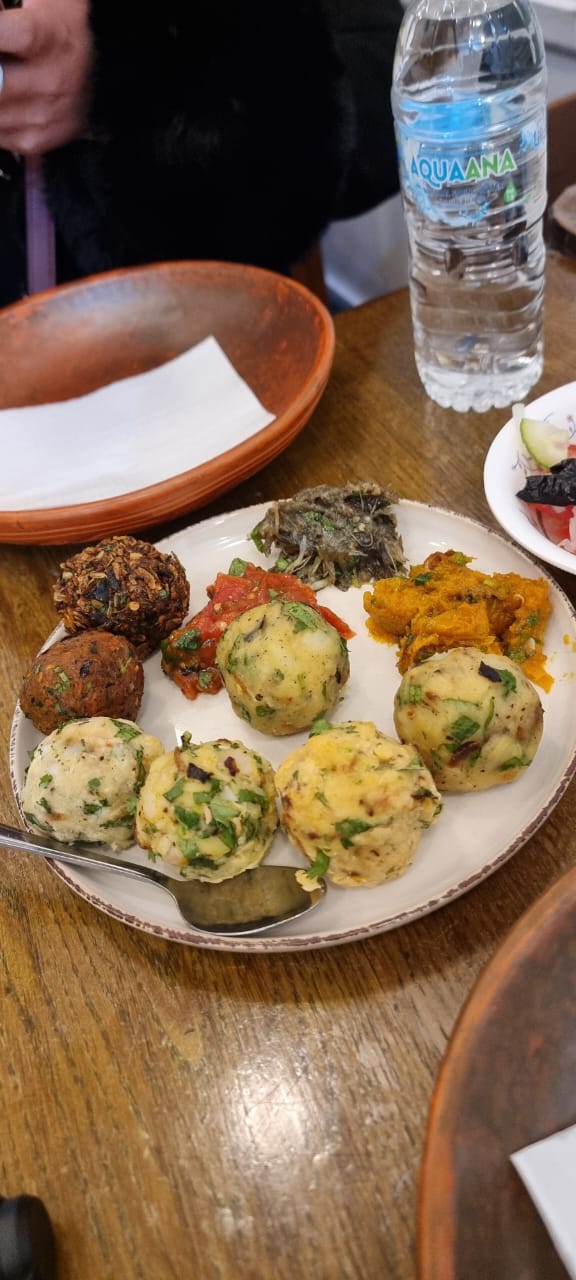
At first, it hit the spot. Hunger has a way of romanticising flavours. But as we ate more mindfully, the truth settled in. We have eaten much better bhartas. Although they offered variety, most of the bhartas seemed to be adulterated with potato as a base, the signature hit of fiery mustard oil seemed lacking, and more sadly, the bhartas were served far too cold for our liking.
Dear King Charles, while we followed your recommendation with enthusiasm, but we must respectfully disagree. Graam Bangla does not quite live up to its hype if you are a true connoisseur of Bengali cuisine.
But was it worth it? Absolutely. Because sometimes travel is not about perfection. It is about experience. About stepping into parts of a city tourists rarely see. About cultural pockets that exist quietly and proudly without needing validation. Bangla Town gave us that. A glimpse into London’s layered soul. A reminder that home can find you in the most unexpected corners of the world, even if the bharta is not the best you have ever had.

 The Tezzy Files