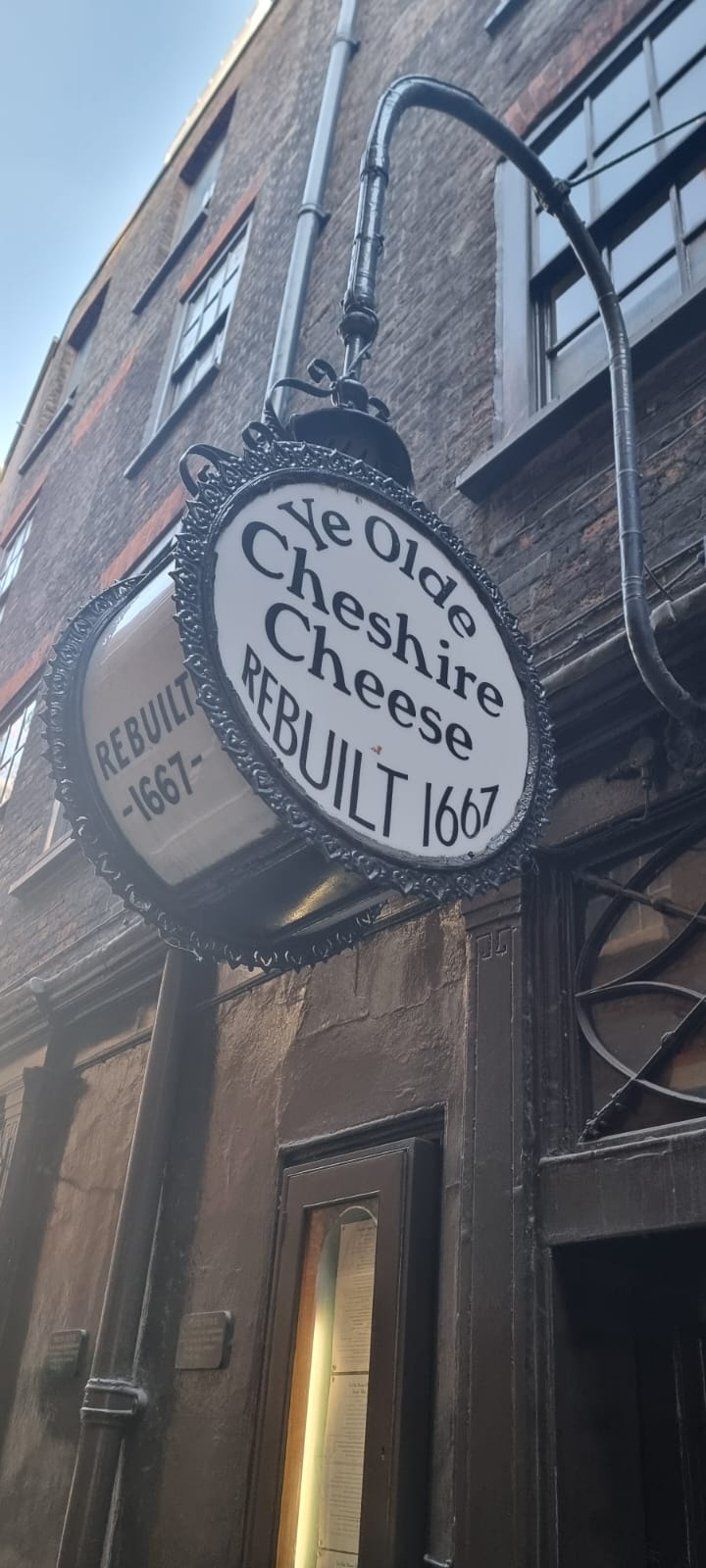
London is a city of layers. Peel one back and you will find another story beneath it, older, grittier, richer in texture. Some of those stories live far away from postcard landmarks and tourist itineraries. One such place is Brick Lane and tucked within it, Bangla Town.

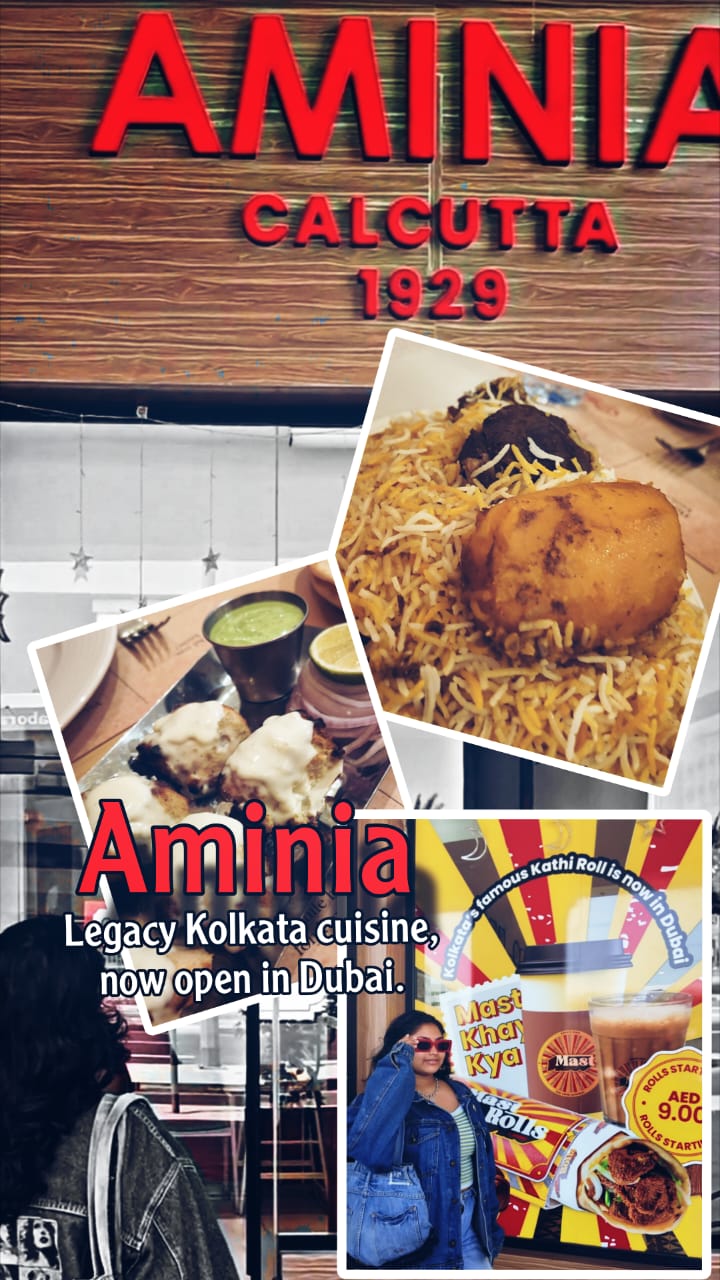
We lunched at Aminia last weekend, a brand-new addition to the bustling Indian restaurant scene of Karama, Dubai. While Aminia may be new to Dubai, the restaurant boasts of a deliciously rich past that originated in Calcutta, India during British rule in 1929. Aminia was founded by Maulvi Abdul Rahim of Lucknow, and was named after his son Mohammed Amin. The menu is therefore greatly inspired by rich Mughlai cuisine.

There are a few things that make Aminia stand apart from the usual Mughlai Awadi restaurants in our city. First off, it is heritage cuisine. Proudly family-owned for four generations, Aminia is scrupulous about maintaining the original taste and secret recipes that were loved by the very first diners in Calcutta.

I escaped the Dubai heat for a week to Carinthia, the southernmost state of Austria renowned for its breathtaking beauty featuring over 1,200 lakes and snow-peaked mountain ranges.

Everything here is so vividly bright and beautiful; brilliant blue skies, emerald-green valleys, and lakes so clear and vibrantly turquoise, you can swim and drink from them. By winter, many of the mountain ranges open as ski resorts, but their beauty is surpassed even through the summer, with scenic hiking and biking trails, and a comfortably breezy yet sunny climate that doesn’t surpass the mid-twenty Celsius range.

When I got invited to Malta for a Military Heritage press trip, I really had no idea what to expect. Malta was never on my travel radar, and ‘military’ is not quite the reason I tend to choose travel destinations. My choice of travel destinations are greatly influenced by a country’s culture, gastronomic offerings, scenic trails and overall safety for women travelers. Little did I know this historically packed itinerary would encapsulate all this, and more!

In the golden light of Malta’s landscape, one ancient crop has shaped its culture, cuisine, and survival for thousands of years: olive oil. During my Military Heritage Press Trip to Malta, we had the absolute pleasure of being hosted for dinner one evening under the Maltese night skies and olive groves at Ta’Xmun Olive Grove. With us was Professor Noel Buttigieg, Head of The Department of Tourism Management at the University of Malta. He gave us an insightful lecture on the significance of olive oil in Maltese history, and I had to summarize his teachings the best I could right here on The Tezzy Files.

Infront of the iconic Red Tower, also known as St. Agatha’s Tower, showcasing its distinct rust-red exterior and 17th-century architecture.

Perched high above Mellieħa Bay, The Red Tower (also known as St. Agatha’s Tower), is one of Malta’s most iconic 17th-century watchtowers. Apart from large fortifications, Malta’s network of coastal watch towers began taking form in the early 17th century, primarily under the rule of the Order of St. John. These towers were constructed as a direct response to increasing threats from Ottoman forces and Barbary pirates, who frequently raided the Mediterranean.

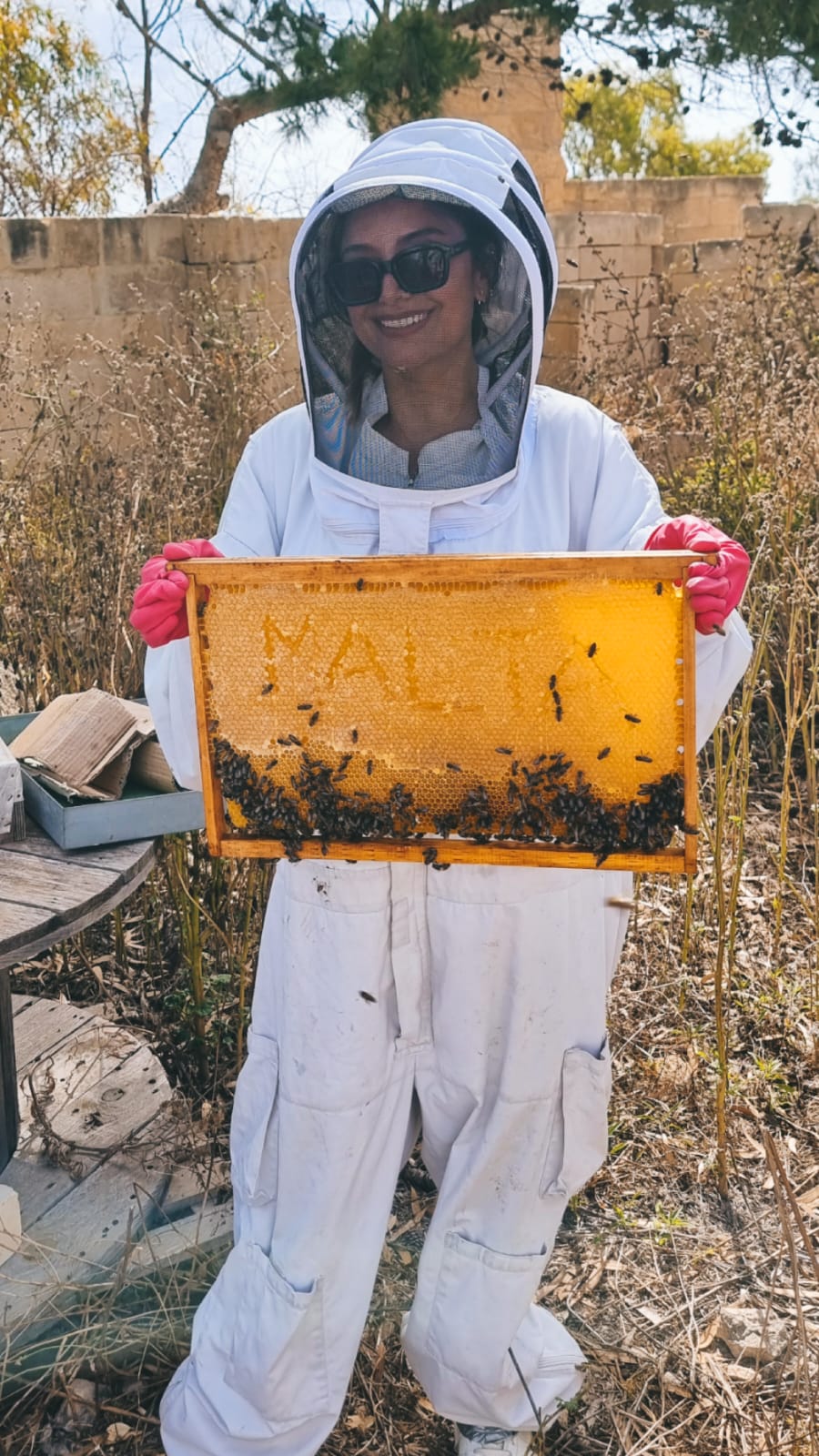
Malta’s association with honey is so ancient that its very name is derived from the Roman word “Melita” meaning ‘honey-sweet’. Historians debate on whether the country got its name for its highly sought after honey, or its honey-hued stone architecture. Whichever it may be, there is no doubt that Maltese honey was considered in high regard since Roman times, and the island’s long-standing connection to apiculture (beekeeping) only grew in sophistication under Roman rule since 218 BC.

The Romans believed honey was so much more than a sweetener. They valued honey for its medicinal properties, and even used it as a valued item of trade.

Last weekend was spent in the heart of the capital city, Abu Dhabi. We booked a Junior Suite at 5-star hotel Millenium Al Wahda. The hotel is located in the midst of the city, offering a great vantage point of urban life. A large, modern structure with Arabesque detailing, the hotel is conjoined with Al Wahda Mall and the residential side of Millenium Al Wahda.

Being an expert at getting lost with Google Maps, I drove into the residential side of the hotel yet the valet was kind enough to accept my car there. We dropped our luggage at the concierge, and headed to the hotel lobby to check in.

Last weekend, my baby girl Farasha and I headed out to spend a weekend of leisure, pool time and great food at newly opened Hyatt Place, Wasl District Dubai.

Being over-confident with directions and over-trusting Google Maps, I ended up at Hyatt Place Jumeirah instead! I was assuming ‘Wasl District’ was in Jumeirah, but it turns out this branch is bang opposite Al Ghurair Centre in the heart of busy, bustling Deira, Dubai.