When I got invited to Malta for a Military Heritage press trip, I really had no idea what to expect. Malta was never on my travel radar, and ‘military’ is not quite the reason I tend to choose travel destinations. My choice of travel destinations are greatly influenced by a country’s culture, gastronomic offerings, scenic trails and overall safety for women travelers. Little did I know this historically packed itinerary would encapsulate all this, and more!

In the golden light of Malta’s landscape, one ancient crop has shaped its culture, cuisine, and survival for thousands of years: olive oil. During my Military Heritage Press Trip to Malta, we had the absolute pleasure of being hosted for dinner one evening under the Maltese night skies and olive groves at Ta’Xmun Olive Grove. With us was Professor Noel Buttigieg, Head of The Department of Tourism Management at the University of Malta. He gave us an insightful lecture on the significance of olive oil in Maltese history, and I had to summarize his teachings the best I could right here on The Tezzy Files.

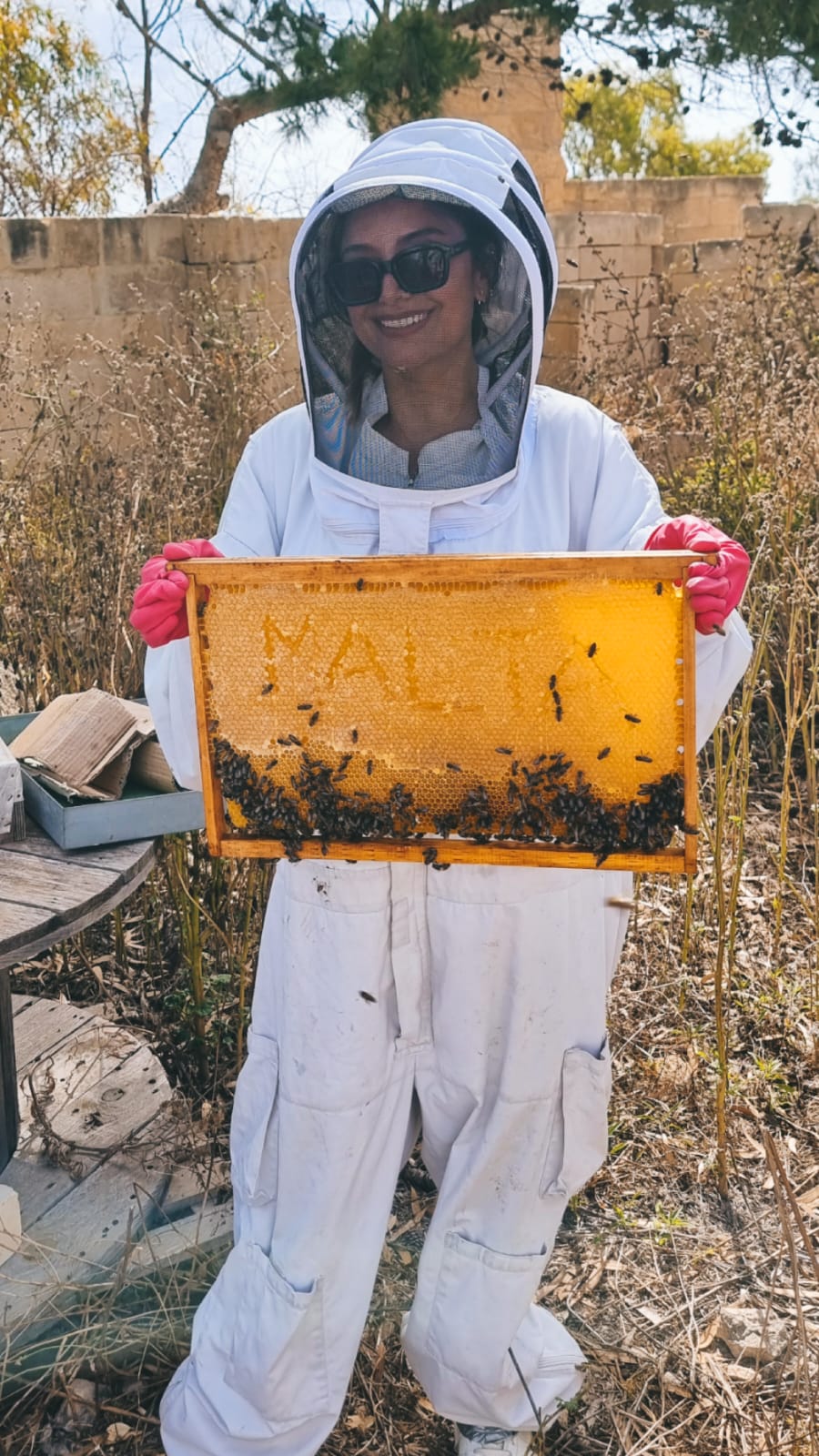
Malta’s association with honey is so ancient that its very name is derived from the Roman word “Melita” meaning ‘honey-sweet’. Historians debate on whether the country got its name for its highly sought after honey, or its honey-hued stone architecture. Whichever it may be, there is no doubt that Maltese honey was considered in high regard since Roman times, and the island’s long-standing connection to apiculture (beekeeping) only grew in sophistication under Roman rule since 218 BC.

The Romans believed honey was so much more than a sweetener. They valued honey for its medicinal properties, and even used it as a valued item of trade.